
Does a Massage Have to Hurt to Work?
“Could you go a bit harder?” is the line we hear most during a massage. Plenty of people feel it only counts if it hurts. But when the pressure keeps climbing, the body starts to push back.
The Soul&Body team ·
What the body does when it hurts
When pressure reaches a tight spot, the body sends a signal of soreness and tension, telling the brain that this area needs to let go. Keep adding weight at that moment, and the signal shifts from “this needs to release” to “this needs protecting”.
Muscles that go into guarding mode contract and harden, and the very area you wanted to loosen becomes tighter. This is why some people find they need heavier and heavier pressure over time: the body resists every session, so the next one needs even more force before it registers.
What the right pressure feels like
You can feel it, there is a little ache, but your breathing stays steady and your body has no urge to pull away. That is the right range. Stay in it, slowly, and the muscle releases layer by layer on its own, without needing to be forced with more weight.
Slow is how you get deep
If pressure goes in too fast, all at once, the body contracts by reflex and pushes back against the elbow or palm. The places that actually need to let go end up out of reach.
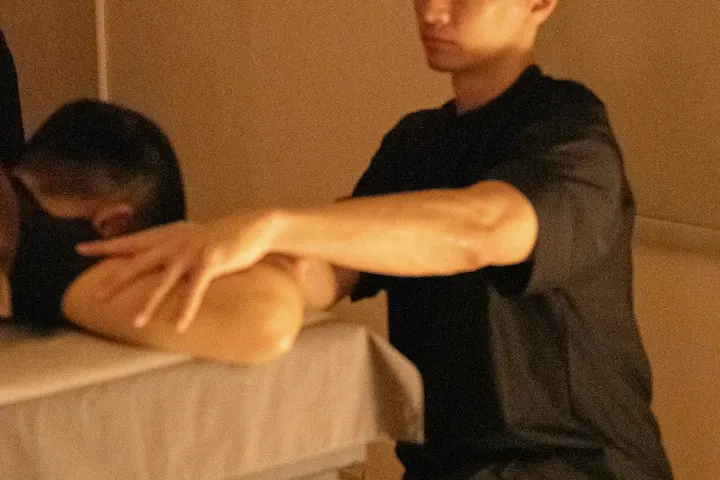
That is why our technique is built on going in slowly and coming out slowly: the pressure is eased in, held, then eased back out. When releasing, the hand lightens first and the body follows. If the therapist’s body moves away while the hand is still pressing, the person on the table feels a jolt, and the release built up so far is broken.
Continuity matters more than force
Repeating the same spot back and forth, or pausing between movements to work out the next step: each of these breaks makes it harder to fully let yourself go. Each press overlaps the previous one by half, travelling the full length of the muscle at the same rhythm and the same pressure, so the body can settle a little deeper within one consistent sensation.
If you want to feel it more, how to ask
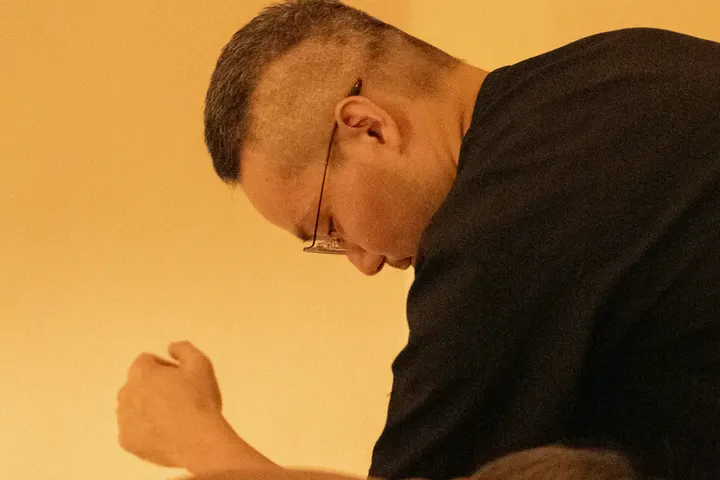
A deeper sensation does not have to mean more weight. Your therapist can change the angle instead. With elbow pressure on the glutes, for example, shifting from pressing flat to hooking in along the line of the muscle feels noticeably different. For larger builds, the outer thigh gets attention as well as the inner thigh.
So there is no need to endure anything. If it feels too firm or too light, or you want more time on a particular area, just tell your therapist.
Related videos
- Why spa massage starts slowlyInstagram ↗
- Pressure doesn't come from forcing it with your handsInstagram ↗
- Steady, continuous technique feels betterInstagram ↗
- Elbow pressure on the glutes: it is all in the angleInstagram ↗
- A smaller contact point reaches deeperInstagram ↗
- Same thighs, different build, different approachInstagram ↗